The Podcast Pitch Email Template We Use on The Podcast Assistant
Most podcast pitches fail before anyone even considers the guest, because the email itself reads like a form letter. A host can tell in the first two lines whether they're looking at something written for their show specifically or something written for nobody in particular and sent to everybody.
This is the structure our AI draft assistant follows every time it writes a pitch inside The Podcast Assistant. It's built from years of pitching hosts and journalists, and you can use it to generate a draft in the app or to write one by hand.
The parts, in order
The episode ideas are the pitch itself, so they sit at the centre, and the guest gets an introduction of a sentence or two because the host is deciding whether the episode idea is good. The whole email runs 110 to 140 words, short enough to read on a phone without scrolling.
- Subject line. Either "Guest idea: Jane Doe, the specific topic" or "Episode idea: the specific topic". The topic comes from the sharpest detail inside the idea itself, so a host can tell what the episode would be from the subject alone. Skip vague labels like "Guest pitch".
- A greeting and one short opening sentence. It can mention the show's most recent episode and one detail from it, say what the show covers, or go straight to the guest. The opening varies from one pitch to the next within a campaign.
- The guest line. One or two sentences introducing the guest by name, with their role and their most relevant company or credential in the same sentence. Link their website on the company name.
- Episode ideas. A plain "Episode ideas:" header, then two to four short bullet points, each one a topic this particular show would cover. This is the core of the pitch, so give it the most space.
- The close. A link to the media kit when there is one, then one plain sentence offering more detail, such as "Happy to send sample questions."
- The sign-off. A single line such as "Thanks," and the sender's own name, never the guest's.
What a finished pitch looks like
Here's a full example built to that structure. The names and details are invented for illustration, but the shape is what goes out in a pitch.
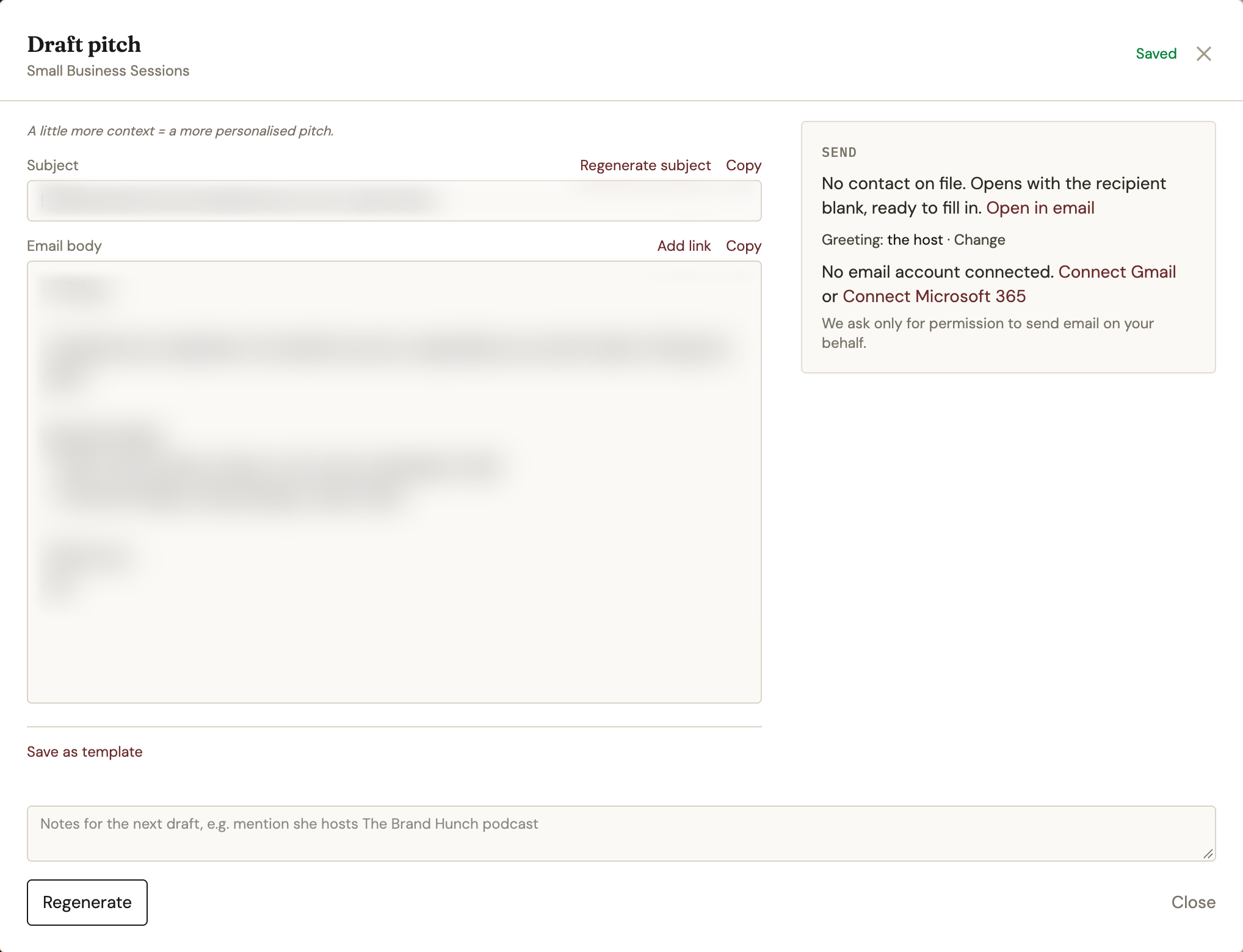
Notice the order: the email opens with the episode, introduces the guest in a sentence or two, lists the ideas, and closes with a single offer. Every sentence is about the show, the guest or the next step.
The follow-up, if you don't hear back
If you hear nothing for a week, send a follow-up. It goes out as a reply in the same thread, so the subject line is "Re:" followed by the original subject, and it stays short: a lead-in line, two to four sentences and a sign-off. Send at most two follow-ups. The first brings one fresh idea for the show, and the second is a last note that names the conversation you had in mind, says nothing more will be sent and leaves the door open. After that, the pitch is done. Here is a first follow-up:
The rules underneath the structure
- Never fabricate a detail such as an episode title, a contact name or a credential the guest doesn't have. If something is unknown, the pitch leaves that part out.
- Frame everything around the show's audience, because a host is deciding what their listeners get.
- Cut anything that sounds like a form letter. If a line could be pasted into any pitch for any guest on any show, rewrite it or cut it.
- Make one clear ask and close once, without hedging, over-explaining or adding more than one call to action.
Using this without starting from a blank page
This is the exact structure The Podcast Assistant's AI draft assistant follows every time you generate a pitch: it pulls in the show's most recent episode, the guest's bio and links, and writes to this shape automatically. You still edit it before it goes out and nothing sends itself. Each draft starts tailored to the show it is for.
See it in the product
No credit card needed