Podcast PR for Agencies: Managing Outreach Across Multiple Clients

Podcast placements have become a normal line item in a PR retainer. Most agencies can find one good show to pitch, and the harder part is doing that reliably across five, ten or twenty client accounts without anything falling through the cracks.
Here's what that looks like in practice, and how to run it without it eating a junior account manager's whole week.
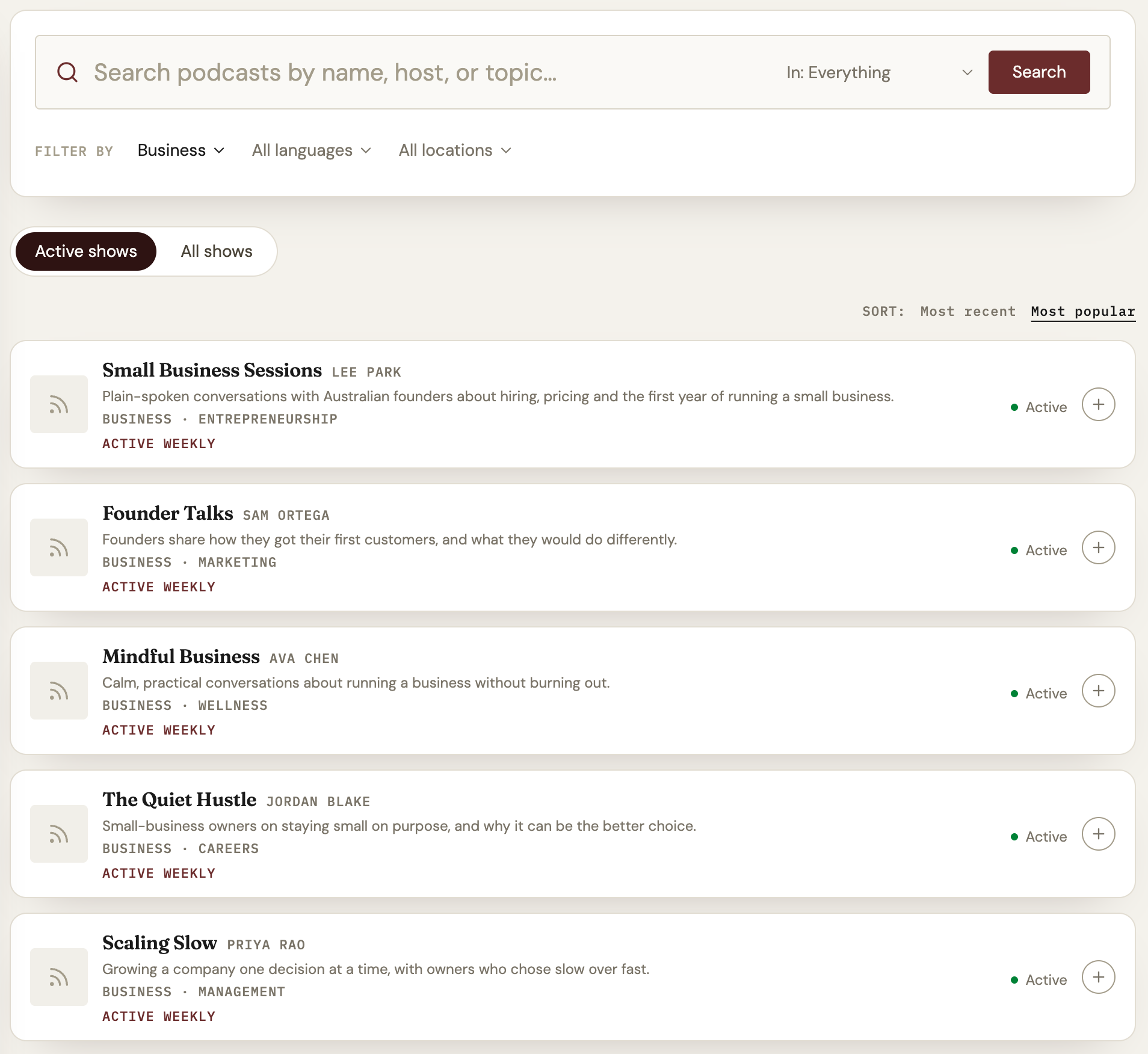
The spreadsheet stops working around client three or four
A spreadsheet is fine for one client. You can hold the whole picture in your head: who's been pitched, who replied, who needs a nudge.
It stops working the moment you're running several campaigns at once. Someone gets pitched twice by two different people on your team. A reply sits unanswered for three weeks because nobody was watching that tab. A client asks for an update and someone has to go reconstruct the story from memory and a half-updated sheet.
A spreadsheet does not know when a pitch went out, when a reply came in, or when a follow-up is due. A person has to remember all of that, for every client, every week.
What needs to be tracked, per client
Strip it back to the essentials and every client campaign needs the same handful of things tracked consistently:
- Which shows are on the target list, and why
- Who the contact is for each one, and how confident you are that it's the right person
- What was sent, and when
- What happened next: no reply, a reply, a booking, a pass
- When a follow-up is due
The moment you're running this across multiple clients, the "and why," "how confident," and "when" parts are exactly what gets lost first. They're the parts that live in someone's head.
Contact confidence matters even more in agency work
When you're pitching on behalf of a client, a wrong contact puts a client's name on a message that bounces, or worse, lands with the wrong person entirely.
A good podcast contact tool tells you plainly when it can't verify a contact, and that matters more in agency work than almost anywhere else, because you're protecting your own reputation and a client relationship that took months to build.
Reporting shouldn't be a separate task
The other thing that gets harder with more clients is reporting. Every agency eventually has to answer some version of "what have you done for us this month," and doing that well means having the numbers on hand: how many pitches went out, how many replies came back, what got booked.
If that information lives in the same place you're doing the outreach, pulling it together for a client update is a five-minute task instead of an afternoon spent reconstructing a month of activity from memory and old emails.
What to look for in a tool built for this
If you're evaluating whether to bring podcast outreach in-house instead of using a spreadsheet or outsourcing it entirely, look for:
- A searchable podcast database that surfaces shows you don't already know
- Contact information with an honest confidence label
- Campaigns organised by client, so nothing gets crossed between accounts
- A way to draft a pitch quickly without starting from a blank page every time
- Sending from your own inbox, an address a producer will recognise
- A tracker that flags when something's gone quiet and needs a follow-up
This is the exact workflow The Podcast Assistant is built around: search, contact, draft, send from your own inbox, track, follow up, all organised by client and campaign. If podcast placements are becoming a bigger part of what you offer, it's worth testing whether it saves you time.
See it in the product
No credit card needed