Podcast guesting · 9 October 2026
How to Land Your First Podcast Guest Spot
A guest spot gives you a long, unhurried conversation with a listener who chose to tune in. This guide covers how to pick the right shows and how to pitch the host.

Most pitching plans chase the same few outlets. Podcast interviews often run 30 to 60 minutes, which gives a guest time to explain how they think, and a listener who chooses to spend that long with you has already given you their attention.
The Infinite Dial Australia 2026 study, run by Edison Research for Commercial Radio & Audio, surveyed 1,600 Australians aged 10 and over in April 2026 and found that audio-only podcast listening reached 50% each month for the first time, so the audience is large.
A podcast appearance does the work of a feature interview, and the audience is already listening.
What a guest spot gives you
A listener who has heard you talk for 40 minutes gets a far better sense of you than a short quote in an article could give. Press coverage tells people what you do, and a conversation lets them hear how you think.
An episode also usually stays available in the show's feed long after it is published, so people can find it later.
Some shows link to their guests from the episode page. Ahrefs, in its guide to podcast link building, says a guest spot can earn a link from that page, as long as you choose shows that still publish and link to their guests. Those links send listeners to your site. Hosts also know other hosts, so one episode can lead to another invitation.
What to look for in a show
The right show for you is worth more than a bigger show that does not suit you. Check three things before you pitch.
- Look at the date of the latest episode. A show that posted last week is a better bet than one that last published in the spring.
- Scan the last 10 or 15 episodes. If most feature someone from outside the show, the host books outside guests.
- Read a few episode descriptions and ask whether your topic would sit naturally between them.
Our guide on how to tell if a podcast is worth pitching covers related checks in more detail.
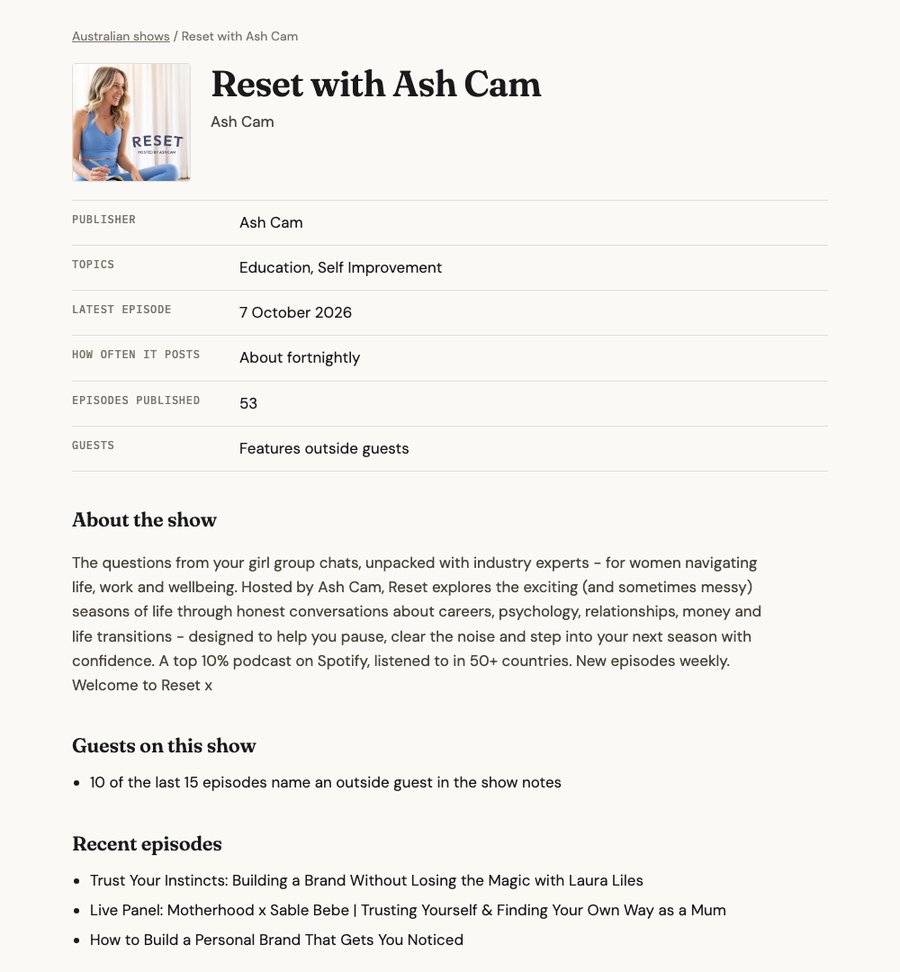
If you are in Australia or New Zealand, our list of active Australian and New Zealand shows shows when each show last posted, what it covers and, where we have the evidence, whether it features outside guests.
Three tips for pitching
1. Listen first, then write
A host can usually tell quickly whether you have heard their show. Listen to at least one recent episode, and note something specific you liked: an idea, a question the host asked, a guest's answer you kept thinking about.
A pitch that opens with that detail is more likely to get read. A pitch for a skincare range sent to a show about mining finance is unlikely to get a reply, however good the product is. If you are unsure who to address, see how to find a podcast's producer or booking contact.
2. Keep it short and give them ideas
Hosts are busy, so make it easy to say yes. Aim for roughly 110 to 140 words that cover who you are, why you suit this audience, and two to four specific episode ideas.
A specific idea is much easier for a host to say yes to. "I can talk about marketing" gives the host nothing to work with, while an idea like this one is an episode they can imagine recording:
Why a growing team stopped chasing every trend and doubled its repeat customers
Put one link to a media kit or LinkedIn profile at the bottom, and leave the rest of the details for when they reply. Our podcast pitch email template shows the layout.
3. Follow up twice, then stop
Busy people miss emails. A short follow-up about a week later gives a host a second chance to see your idea. Write it with one extra idea they have not seen, so it adds something new.
If there is still no reply, send one last note a week after that, saying nothing more will follow. Then move on to the next show. You can always pitch the same host again later with a different idea.
Keeping track as you go
Pitching ten shows is manageable on a spreadsheet. With fifty, it gets easy to mix up names or email the same host twice. Whatever you use, record who you pitched, when, and what you sent, and check the host's name against the show before every send. Ahrefs suggests sending pitches in batches of about five to ten a week, a pace that keeps follow-ups manageable.
A pitch that opens with the right name feels personal, and a wrong name tells the host the pitch was not written for them.
Where to start
Pick five shows that fit your story, listen to one episode of each, and send three short, specific pitches this week. That is enough to start learning how hosts respond.
The Podcast Assistant helps you find shows, get host and producer contacts, draft each pitch around the show's recent episodes and send it from your own inbox, and it keeps every pitch in one tracker. Your first 14 days are free, with no credit card needed.
Related reading
- How to pitch yourself as a podcast guest
- How to measure ROI from podcast guesting campaigns
- Active Australian and New Zealand podcasts to pitch
Sources
See it in the product
No credit card needed